


If your KitchenAid dishwasher isn’t cleaning properly, it can be frustrating, especially when you expect spotless dishes after a full cycle but still see food residue or cloudy glassware.
This is a common issue for many homeowners, and across Utah, we often see the same patterns of small, overlooked problems that slowly affect how appliances perform over time.
The good news is that a KitchenAid dishwasher not cleaning properly doesn’t always mean a major repair is needed. In many cases, it comes down to simple factors such as maintenance, detergent use, or dishwasher loading.
In this guide, we’ll walk through the most common reasons behind poor cleaning performance and what you can do to fix them. If you ever need help, it’s always a good idea to reach out to reliable and trusted professionals who understand these issues firsthand.
Why Your KitchenAid Dishwasher Isn’t Cleaning Properly
Dishwashers are meant to make everyday life easier, but they still rely on a few key things to work the way they should:
- Consistent water pressure
- Proper water temperature
- Effective detergent action
If one of these is off, you’ll start to notice a drop in performance. A KitchenAid dishwasher not cleaning properly is often the result of small issues building up over time.
This is something we commonly see not just with dishwashers, but with other appliances as well, like washers that slowly lose efficiency due to buildup. It’s a pattern many homeowners experience, which is why regular maintenance matters. You can see similar cases in our washing machine repair services.
1. Clogged or Dirty Spray Arms
Spray arms are responsible for distributing water evenly throughout your dishwasher. When they become clogged, water can’t reach all your dishes.
Signs to look for:
- Some dishes come out clean, others don’t
- Visible debris in spray holes
- Weak water distribution
Here are a few things you can try:
- Remove and rinse the spray arms
- Use a toothpick or brush to clear blockages
Even a small blockage can significantly reduce cleaning performance.
2. Blocked or Dirty Filter
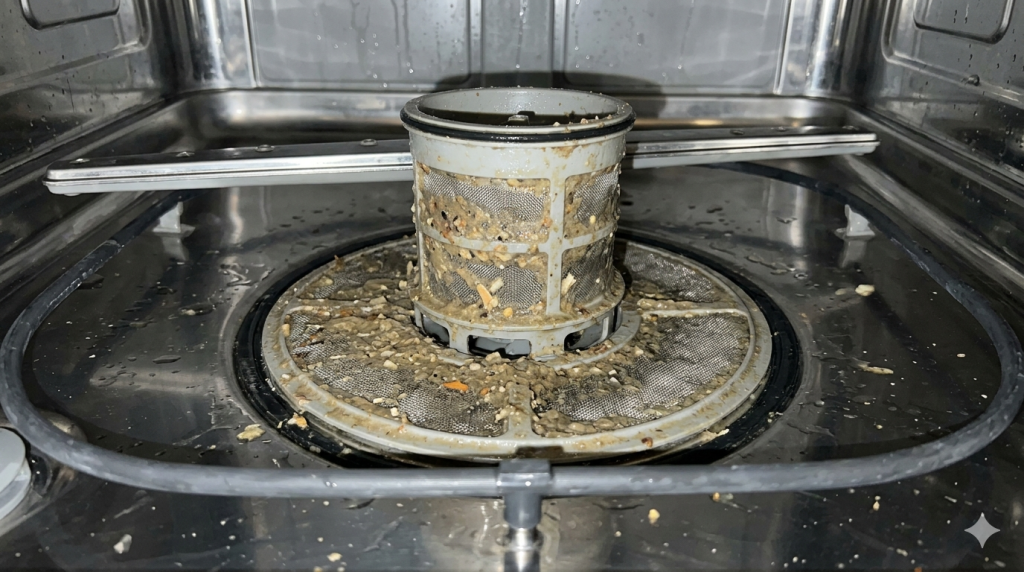
A dirty filter is one of the most common reasons a KitchenAid dishwasher not cleaning becomes a recurring issue.
You might notice:
- Food particles left behind
- Odor inside the dishwasher
- Water pooling at the bottom
Here are a few things you can try:
- Remove the filter from the base
- Rinse it thoroughly under warm water
- Clean it regularly (monthly is ideal)
In many homes, this is one of those things that doesn’t get much attention until the dishwasher stops cleaning the way it used to. Over time, food particles and residue can build up in the filter, making it harder for water to move around properly. KitchenAid also explains how this kind of buildup can affect cleaning performance. You can read more in their guide, Dishwasher Not Cleaning: Troubleshooting Tips and Fixes.
3. Using the Wrong Detergent or Too Much
Not all detergents work the same, and using the wrong one can impact cleaning results more than expected.
Common mistakes:
- Using low-quality detergent
- Adding too much detergent
- Mixing multiple cleaning products
Better approach:
- Stick to a reliable detergent
- Follow recommended measurements
- Avoid overloading with cleaning agents
Sometimes, improving performance is as simple as changing what you use.
4. Low Water Temperature
Hot water is essential for breaking down grease and activating detergent. If your water temperature is too low, your dishwasher won’t clean effectively.
Ideal temperature:
- Around 120°F (49°C)
Signs of low temperature:
- Greasy dishes
- Detergent not dissolving fully
- Poor cleaning results
What you can do:
- Run hot water at the sink before starting
- Check your water heater settings
If the issue continues, it may point to a deeper problem. In that case, it’s best to have it checked through a professional dishwasher repair service.
5. Improper Loading of Dishes
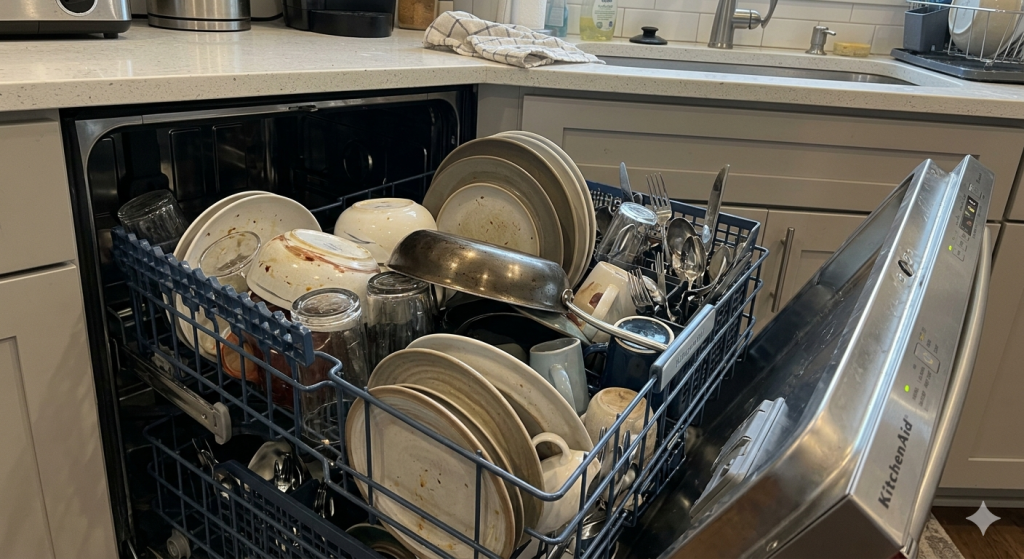
Even a fully working dishwasher can struggle if dishes aren’t loaded correctly.
Common mistakes:
- Overcrowding racks
- Blocking spray arms
- Incorrect placement of larger items
Better loading tips:
- Leave space between dishes
- Face dirty surfaces toward the spray arms
- Avoid stacking items
Small adjustments can make a noticeable difference in cleaning results.
If you’ve already tried the steps above and your KitchenAid dishwasher not cleaning issue still hasn’t improved, there’s a good chance something more technical is going on behind the scenes.
These kinds of problems don’t always show up right away. They tend to build up slowly, especially with regular use.
In some cases, it could be:
- A circulation pump that isn’t pushing water as strongly as it should
- A water inlet valve that isn’t allowing enough water into the unit
- Normal wear and tear affecting internal parts over time
If left unchecked, these issues can gradually affect performance even more. Getting it looked at early can help prevent bigger repairs later on and keep your dishwasher running the way it should.
FAQs
Why is my KitchenAid dishwasher leaving food on dishes?
This is usually caused by clogged spray arms, a dirty filter, or improper loading.
How often should I clean my dishwasher filter?
At least once a month, especially if you use your dishwasher regularly.
Can hard water affect cleaning performance in Utah homes?
Yes. Hard water is common in many areas and can leave mineral buildup that affects cleaning results.
Should I repair or replace my dishwasher?
If the issue is minor, repair is usually more cost-effective—especially for newer units.
Final Thoughts
A KitchenAid dishwasher not cleaning properly is often the result of small, fixable issues. From clogged filters to detergent choices, addressing these early can help restore performance quickly.
For many homeowners, regular maintenance and small adjustments are enough to keep appliances running smoothly. But if the problem continues, getting a professional assessment can save you time and prevent bigger repairs later on. If you’re dealing with ongoing issues, you can always get in touch with our team today for reliable, local support.